Friday, August 16, 2024

7 Key Factors to Consider When Selecting the Right Borehole Pump

7 Key Factors to Consider When Selecting the Right Borehole Pump

Interrupted water supply, poor water pressure, unnecessary energy consumption and excessive pump maintenance are issues that can all be expected if the wrong borehole water pump is selected for your installation. With lots of options on the market, making a decision on what model you need can be quite daunting. This is exactly why as a leading Borehole Pump supplier, Whisper Pumps have put together a handy guide to the factors you need to consider.

Borehole Pumps in Narobi Kenya
Borehole Pump

If you’re reading this article then you will already know that A Borehole Pump has a very specific design of a thin, vertical pump that is immersed into a drilled hole/well in the ground to extract water. Their very specific application means that there are some features that are standard amongst all submersible borehole water pumps for example being made from corrosion resistant materials such as stainless steel to prevent abrasion caused by the earth and mineral deposits. But in other ways they can vary…

1. Borehole size

Typically, you will find that most boreholes for private water supply are 4 to 6 inches in diameter, making 4 inch borehole pumps our most commonly selected models, followed by 6 inch. In some scenarios though, smaller boreholes are drilled at 3 inches. When this is the case, or where a 4 inch borehole has reduced in size due to ochre and residue deposits that have built up over time, a 3 inch Borehole Pump may be required.

2. Immersion depth

How deep a borehole is drilled into the ground depends upon the depth of the ground water level that it needs to reach. Different models of submersible borehole water pumps have different maximum immersion depths, so it is vital that the selected pump is able to efficiently operate at the water level in question.

3. Flow rate

The required flow rate of a borehole pump (this being the speed at which the water is moved) is directly affected by the demand on the water supply and what it is being used for. For example, a borehole supplying water to several domestic properties for their drinking, toilets, showers and washing will require much higher flow than one that is simply used for periodic cleaning down of equipment.

4. Pressure

By nature, borehole water pumps typically offer high pressures due to having to pump long distances vertically. However, it does need to be ensured that the selected model is able to generate the pressure required to get the water supply to where it needs to be. This depends upon the depth of the borehole to ground level and then the distance from the ground level to the final end point e.g. where the water tank is sited. The further the distance, the higher the pressure requirements of the borehole pump to prevent the water from trickling out. When it comes to both flow and pressure, it is common for a margin of safety to be added to ensure that once installed the pump does not fall short. Oversizing however is one of the largest causes of pump inefficiency resulting in unnecessary energy consumption and electricity costs, so we recommend being as accurate as you can when determining duty requirements.

5. Power supply

Check whether it is 230v or 400v electricity supply you have on site, as this is something that needs to be considered when selecting which submersible borehole pump you need for your installation.

6. Sand handling capabilities

Depending upon the location of the water source in question, there may be more sand content in the water than others. When this is the case, the borehole pump needs to be able to handle the sand without clogging or abrasion. Models with self-cleaning floating impellers are typically able to pump more g/m3 than others and should be selected.

7. Borehole pump control features

By implementing borehole pump controllers features alongside the pump, it can help private water supply feel as close as possible to getting water off the mains:Starter box – on/off switch
Variable speed drive – Adjust pumps speed to the current demand on the water supply
Overload protection - Stops pump running when experiencing voltage overload to prevent pump damage.
Dry run protection – Stops pump running when there is a low water level to prevent burn out and pump damage.

If you’re still not sure what you need, then that’s where we come in! Our technical sales engineers have been specifying borehole pumps to borehole drillers, water engineering companies as well as owners of private water systems themselves. Simply give us Contact Us and we will advise you on the borehole water pump that best suits your installation.

Solar Water Pumps

Solar Water Pumps

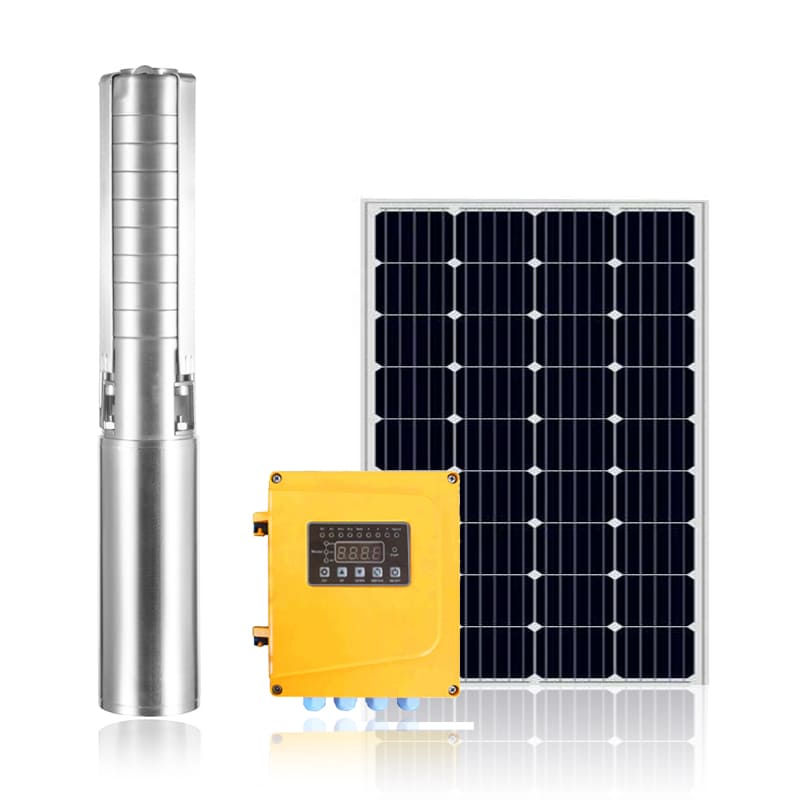
Steadypoint Engineering provides solar water pumping solutions for moving water efficiently. We undertake pumping projects including farm applications through to mining and commercial irrigation projects. Large or small, quality solar pumping system design starts with analysis.

Solar Water Pumping Services In Kenya
Solar Water Pumps

We uniquely combine solar power and water pumping and are leaders in the blending of these specialized areas. Whether it’s a residential roof solar install or a large scale solar irrigation design and build, we’ve got you covered.

Solar Water Pumps In Nairobi
DC Booster Pump

Our niche in this area has been honed through comprehensive experience and expertise in both the solar and pumping industries. We can walk you through the available pumping options to arrive at the most optimal solution. Your Solar and Water specialists.

Solar Water Pumps In Kenya
DC Borehole Pump

Solar Pumping Inverter In Nairobi Kenya
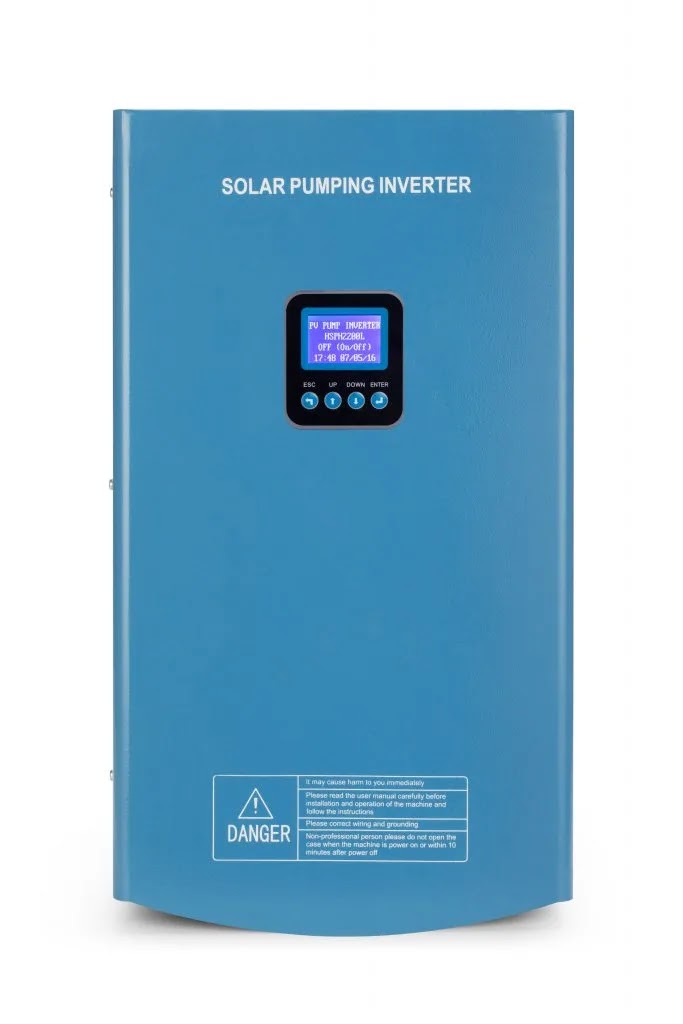
Solar Pumping Inverter

Thursday, August 15, 2024

Solar Water Heater

Solar Water Heater

Non-pressurized Vacuum Tube Solar Water Heater

Working principle

Roof mounted highline solar water heaters are close couple style that have the solar collector or tubes directly connected to the storage tank. The heated water from the collector will rise into the storage tank naturally by thermosyphon due to the angle and pitch of the roof. Flat roof houses will require a pitched angle frame to mount the solar product on to gain the best thermal sunlight.

Solar Water Heaters In Kenya
Solar Water Heater


Product specifications

Solar Water Heaters In Nairobi
Specifications


Pressurized Flat Panel Solar Water Heater

Solar Water Heaters In Kenya
Pressurezed Flat Panel Solar Water Heater

Product specifications


Solar Water Heaters In Nairobi
Specificataions

Solar Water Heaters In Kenya
Solar Water Heater
Solar Power Backup System

Solar Power Backup System

Power Backup System

At Steadypoint Engineering, you can rely on our skillful team to build you a high quality solar power backup system. We will ensure that we design and recommend a system that perfectly fits your needs and budget. And when you work with us, you will join hundreds of happy customers all over Kenya. Whatever your energy requirements are, let’s us show you our innovative approach to solar design and fitment. And when it comes to customer service, you won’t find a more committed team.

Water Pumping Services In Nairobi
Solar Power Backup System


PV System

A residential solar photovoltaic (PV) system is a rooftop generator that converts energy from the sun into electricity that you can use in your home. High quality photovoltaic cells are manufactured together to form solar panels. The direct current generated by the solar panels is converted into alternating current by the power inverter. This power can then be utilized as a power backup system directly within your house or exported back to the grid.

The mission is to make clean, renewable energy accessible to everyone by helping families and businesses across Kenya save on electricity bills by offering the best solar solutions.

Our products include best solar panels from renowned solar manufacturers including Yingli, Jinko, Longi and Trina solar. The solar solutions we offer includes cutting-edge inverters and the latest solar battery storage systems. No matter your budget or your goals, we have a vast experience in solar installation and specialists ready to help you get the most out of the solar switch. The renewable energy revolution is already underway, don’t get left behind.

Home Power Backup Solutions

Grid-tied or off-grid? Now that solar panels have been installed on the roof, an inverter is on the wall and there is battery-storage, can we proudly claim “we are energy self-sufficient and no longer require a grid connection”?

An off-grid system, power is generated by the solar panels, stored in batteries and then inverted to match the appliances power requirements. Such system runs independently from the grid and therefore you need an off-grid bi-directional inverter charger.

A grid-tied system, the DC electricity is fed into a grid-connected inverter which converts the DC electricity into AC electricity. Grid-tied solar inverters are equipped with an anti-islanding function as a grid compliance requirement. This requirement means the solar inverter will be shut down when the grid is down (e.g. Unplanned outage or scheduled maintenance work etc). For such a system you may require a Bi-directional meter. It measures the electricity consumption or usage but also the amount of surplus energy the PV Solar System produces and exports to the electricity grid. You qualify a credit or payment for this surplus power.

An alternative to both off-grid and grid-tied is a hybrid system. A hybrid system remains tied to the grid but includes a battery bank to store surplus energy. Hybrid inverters have a priority setting function where you may appoint either grid or solar as the primary power source. In a hybrid system, depending on the household appliances you want to run, either solar or the mains power becomes a power backup system to the priority source.

Steadypoint engineering helps you arrive at the best solar system, the most economical and efficient system to meet your requirements.

Solar Batteries Types

As we know, Solar Systems go to sleep as soon as the sun goes down. This is when the battery plays the part of the sun, discharging that stored energy to meet your electricity needs.

When installing a battery you will have what’s referred to as a backup option. When choosing the right battery for your application, you likely have a list of conditions you need to fulfill. How much voltage is needed, what is the capacity requirements, cyclic or standby among others. Batteries commonly used in solar backup are gel batteries and lithium ion batteries.

Gel Battery

A gel battery is very similar to a traditional lead-acid battery with the addition of silica to the electrolyte to create the gel like substance.

Gel battery employs VRLA technology where the liquid electrolyte is suspended in a fumed silica gelling agent causing it to partially solidify. The gelling agent offers superior resistance to leakage and enhanced durability with little maintenance and no watering.

This thickening of the electrolyte means that gel batteries can be installed in a variety of positions and don’t emit as many fumes.

Benefits of choosing Gel battery

  • Completely maintenance free. Sealed construction eliminates periodic watering, corrosive acid fumes and spills.
  • Electrolyte will not stratify, no equalization charging required. Allows faster recharge
  • Deep cycle ability for heavy demand applications
  • Less than 2% per month stand loss means little deterioration during transport and storage

Lithium-ion Phosphate (LiFePO4) Batteries

A LiFePO4 battery is a type of rechargeable lithium-ion batteries that uses iron phosphate (FePO4) as the cathode material. LiFePO4 stands for lithium iron phosphate battery, or LFP battery.

Compared to other lithium batteries and lead acid batteries, LiFePO4 batteries have superior properties. They might not be the cheapest lithium ion batteries solution, but they are a smart investment. LiFePO4 are becoming an increasingly popular type of lithium battery for the following reasons:
  • High discharging and charging efficiency: Charge and discharge efficiency can reach as much as 90%, compared to only 80% for lead-acid batteries.
  • Long battery life cycle: Has a life cycle of over 2,000 times compared to 300 times for long-life lead acid batteries. Theoretically, it could last between 7 and 8 years.
  • Performs well at temperatures: The LiFiPO4 battery performs well at extremes of temperature with an operating range of -20C to +75C. Heating peak can reach 350°C-500°C
  • High capacity battery: Compared to lead acid batteries and, the LiFiPO4 battery has a much larger capacity of between 5AH and 1000AH.
  • Zero memory effect: LiFiPO4 batteries have no memory effect, unlike other rechargeable batteries.
  • Lightweight: A LiFePO4 battery weighs one third that of lead-acid batteries.
Borehole Pumps

Borehole Pumps

Borehole pumps are a class of submersible pumps for lifting water from great bore depths. Steadypoint Engineering is a premier distributor and repairer of premium submersible pumps including Grundfos, Lowara and Pedrollo. Our range of high quality pumps will meet the needs, challenges and requirements of virtually every industry.
PVC Borehole Pipes

How to choose a borehole pump

An expert from Steadypoint Engineering will be happy to help you select the right pump for your application. You can always contact us for a free consultation and quote. We will base the selection on the points below, among other things

Depth of the source:

It is entirely important to know how deep the water is in the well, the water level. A borehole pump cannot withstand running dry and it is therefore important that there is always sufficient water supply for the pump in the well.

Head of the pump:

It is important to know from how deep the water should be pumped, and also how much pressure is required to pump the medium further. This head can often be calculated when you know the point of delivery where the medium is needed or the piping system.

Capacity of the pump:

How many liters /cubic meter is required per second, minute, hour? What capacity should the pump deliver. This question is often asked together with the head of the pump and is also referred to as the flow rate of the pump.

Typical Borehole Equipment

First and the heart of the equipment is a complete pump set (a coupled wet-end and the submersible motor). Second is the purchase of separate products (accessories), which in combination also ensures its function. These accessories include column pipes, borehole cover head, submersible cable and the switching unit. Although borehole pumps have an integrated check valve, it is also necessary to install a check valve on the borehole head so that when the pump goes off, the water head already in the pipeline does not back-flow and damage the pump with its pressure (water hammer).

Can Borehole Pumps be Used in a Well?

Yes. Borehole pumps can be placed vertically or horizontally. For a well, it is advisable to include a cooling sleeve, a special device in a shape of a tube which function is to cover and ensure flow around the pump. It is practically an imitation of a borehole. Cooling sleeve ensures water swirls around the pump to ensure its proper cooling. If a submersible pump is placed in standing water, it may overheat and cause irreversible damage.
Booster Pumps

Booster Pumps

Pressure booster pumps adjusts water pressure to specific requirements in domestic or industrial applications. These pumps increase the pressure or head of the liquid in the main pipeline that the main duty pump or gravity cannot achieve. They come in different sizes in wattage (Kw)/Horsepower (hp) and the pumping head (m). Booster pumps are of single or three phase depending on the power available on site.

Water Pumping Services In Kenya
Booster Pumps

Years of experience in the filed has taught us that no two pumping problems are the same. We are a team of design experts who asses your needs to design the most viable solution for your applications. Our team can also interpret drafts made by other engineers to develop a finished product or project more efficiently.

How To Automate a Booster Pump

Depending on the application requirements, there are different switching units that control and in some cases regulate the operation of the pump. They come in three different varieties; pressure switch, float switch and flow switch. These devices not only ensure correct pump operation but also extends pumps lifespan, prevents dry running and also saves the pumps energy requirements.

Pressure Vessels
Switching Unit combining Pressure and Flow Switch
This switch is a combination of a flow and pressure sensor. Upon opening a tap, the pressure drops first and the switch turns on the pump. When the tap closes, the second sensor detects a stop in the flow and switches off the pump before the pressure in the system rises.

Pressure switching Units

Pressure switches work in combination with a pressure vessel. They switch on the pump so that pressure in the vessel remains within the set range. During water intake pressure drops, the switch detects it and switches on the pump. 

Water Pumping Services In Nairobi
Pressure Switch

When the water draw-off is finished, the pump runs until the pressure in the tank reaches the set cut out value again. After opening the tap, water starts to flow, but the pump does not start again until the cut in pressure is reached.

Float switching unit

For dry running protection, float switching unit switches off the pump once the point of delivery is full. They can be incorporated in the control panel either as low level sensor or as high level sensor.

Float Switch

Our Partners